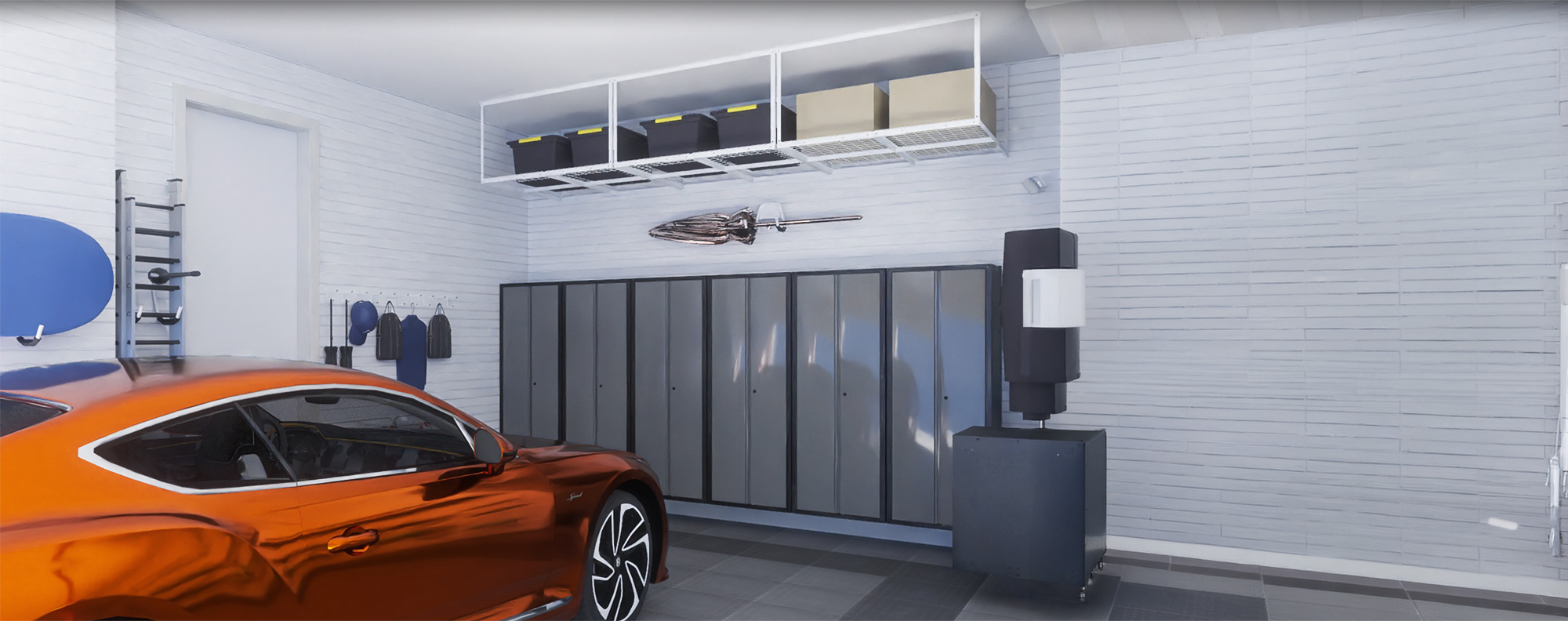

If you’re wondering whether interlocking garage floor tile is better than epoxy coating, longevity and repairability are two of the biggest differences. Modular garage tile typically lasts longer and allows individual tiles to be replaced if needed, while epoxy creates a bonded surface that can require more involved repairs if it cracks, peels, or loses adhesion.
For homeowners comparing flooring before a garage remodel, it helps to look beyond appearance. Installation, durability, repairability, moisture handling, and slip resistance can all affect how a garage floor performs over time.
How Are Garage Floor Tiles and Epoxy Different?
Interlocking garage tile and epoxy take fundamentally different approaches to finishing a concrete garage floor.
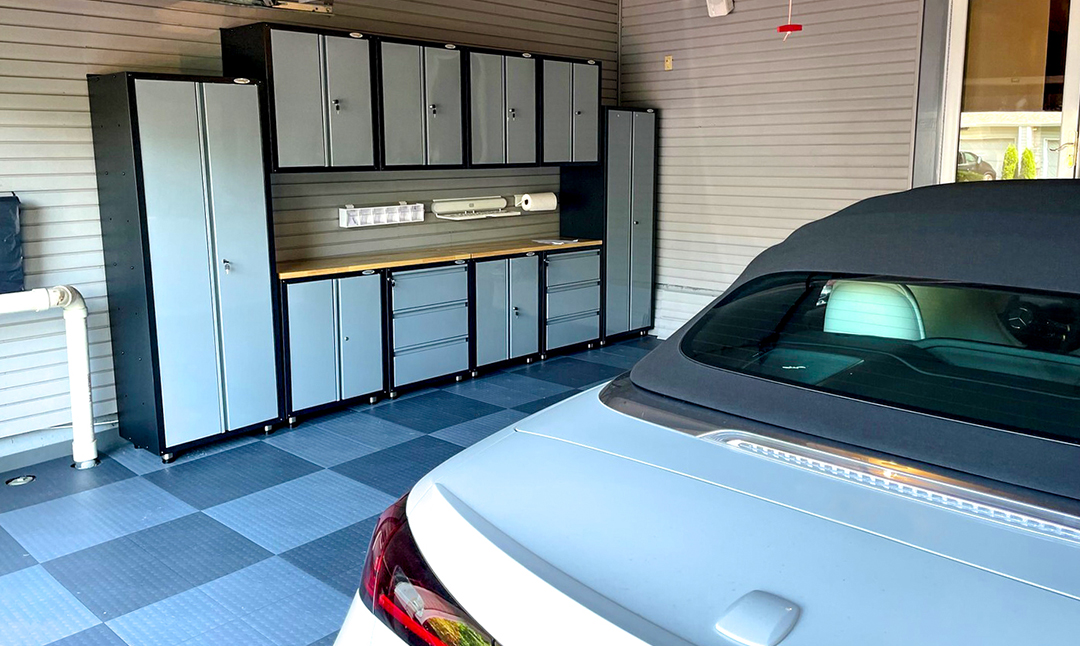
Modular garage flooring consists of individual tiles that interlock over the concrete slab. Because the flooring isn’t bonded directly to the concrete, individual tiles remain accessible and can be removed or replaced if needed.
Epoxy is a resin-based coating applied directly to prepared concrete. Once cured, it creates a continuous surface bonded to the slab.
Both can provide a finished appearance, but those different installation methods affect how the floor handles damage, repairs, moisture, and long-term use.
GarageTek’s modular garage flooring includes ProTek Modular Floor and RibTRAX Pro, both designed for professional installation as part of a complete garage system.
For homeowners still deciding between tile and epoxy, the most useful comparison isn’t simply which floor looks better on installation day. It’s how each option is likely to perform and what maintaining or repairing it may involve over time.
Which Is More Durable and Easier to Repair?
When comparing garage floor tile and epoxy, modular flooring has a significant advantage in both expected longevity and repairability.
Interlocking modular tiles typically offer 15–20+ years of durability, compared with 2–5 years for epoxy. Actual performance can vary based on the product, installation, use, environmental conditions, and maintenance, but the way each flooring type is constructed also affects its long-term serviceability.
An epoxy floor functions as a bonded surface. If an area cracks, peels, or otherwise fails, repairing it can require surface preparation and refinishing. The extent of the repair will depend on the cause and severity of the damage.
Modular flooring is made from individual components. If a tile becomes damaged, it can be removed and replaced if needed without automatically replacing the surrounding floor.
That’s an important distinction when asking how long garage floor tile lasts compared to epoxy. A damaged tile doesn’t necessarily determine the useful life of the entire modular floor.
GarageTek’s ProTek Modular Floor also provides specific performance data beyond expected longevity. ProTek has a load-bearing rating of more than 200 psi, making it an extraordinarily durable garage flooring option.
Routine care is important with either flooring choice. Keeping the garage clean and addressing spills and debris can help maintain the finished space over time. ProTek and RibTRAX Pro are easy to maintain with routine cleaning, and debris can be vacuumed from the ribs of RibTRAX Pro tiles. Read our garage maintenance tips for additional guidance on caring for an organized garage.
How Does Installation Time Compare?
Installation is another significant difference between modular garage tile and epoxy.
Modular tiles can typically be installed in 2–4 hours and don’t require cure time. The tiles interlock over the existing concrete rather than relying on a permanent bond with the slab.
Epoxy typically requires 2–3 days for installation, followed by about three days of cure time. Preparation is particularly important because the coating needs to adhere properly to the concrete.
For homeowners who want to minimize disruption, that shorter installation process means the garage can return to use sooner.
How Do Tile and Epoxy Handle Moisture and Slip Resistance?
Moisture is an important consideration for a garage floor. Rain, melting snow, and wet tires can all bring water into the space.
Modular tile offers excellent moisture tolerance because the finished floor doesn’t depend on bonding directly to the concrete.
GarageTek’s ProTek Modular Floor floats above the slab, allowing water and air to move beneath the tiles. RibTRAX Pro also allows water and air to flow beneath the flooring, helping manage the wet conditions that can occur in a garage.
Epoxy is bonded directly to the concrete, making the condition and preparation of the slab especially important. Moisture can interfere with a bonded coating and contribute to problems such as peeling or loss of adhesion.
Slip resistance matters in a garage, especially when rain, melting snow, or wet tires bring moisture inside. ProTek Modular Floor has been tested under ASTM E303, with slip-resistance ratings of .66 when dry and .50 when wet, helping provide a secure walking surface in changing garage conditions.
RibTRAX Pro uses a perforated design that allows water and other fluids to pass through the surface instead of remaining on top of the tile.
Epoxy surfaces can vary depending on their finish and texture, so homeowners looking into coatings should evaluate the slip resistance of the specific system they’re considering.
When comparing a garage floor coating to tile, it’s important to consider not only how the finished floor looks, but how it will handle water, everyday use, and changing conditions in the garage.
Which Garage Flooring Option Is Right for You?
The right flooring choice depends on your priorities, but modular tile offers clear advantages in long-term performance, moisture tolerance, slip resistance, and installation time. For homeowners investing in a cleaner, more functional garage, it provides an extraordinarily durable foundation for the finished space.
Before deciding, consider how you use your garage, the condition of the existing concrete, moisture exposure, how important individual repairs are to you, and how the floor should coordinate with the rest of the space.
GarageTek specializes in modular garage flooring and does not install epoxy, polyaspartic, or other floor coatings. During a complimentary garage design consultation, a GarageTek professional can evaluate your space and help determine how modular flooring can work with the rest of your professionally designed garage system.
Frequently Asked Questions
How Long Does Interlocking Garage Floor Tile Last Compared to Epoxy?
Modular garage tile typically offers 15-20+ years of durability, compared with 2-5 years for epoxy. Individual tiles can also be replaced if needed, so localized damage doesn't necessarily shorten the life of the entire floor.
Does Epoxy or Modular Tile Handle Moisture Better?
Modular tile offers excellent moisture tolerance and allows water and air to move freely beneath the finished surface. Epoxy bonds directly to concrete, making slab conditions, moisture, and proper preparation especially important to its performance.
Explore a Longer-Lasting Approach to Garage Flooring
When deciding whether interlocking garage floor tile is better than epoxy coating, consider more than how the floor looks when it’s first installed. Durability, repairability, installation time, moisture handling, and slip resistance can all make a meaningful difference over years of use.
GarageTek’s ProTek Modular Floor and RibTRAX Pro provide extraordinarily durable modular flooring that can be professionally integrated with cabinets, wall organization, overhead storage, and the rest of your garage design.